Lessons from the Trail
During a recent trip hiking in Arkansas, we spent several days exploring trails that led to waterfalls. One of those hikes took us along the Lost Valley Trail to Eden Falls near Ponca.
Like many people, I enjoy waterfalls for their beauty, but I also find myself watching the water itself. Where it flows. Where it disappears. Where it returns again.
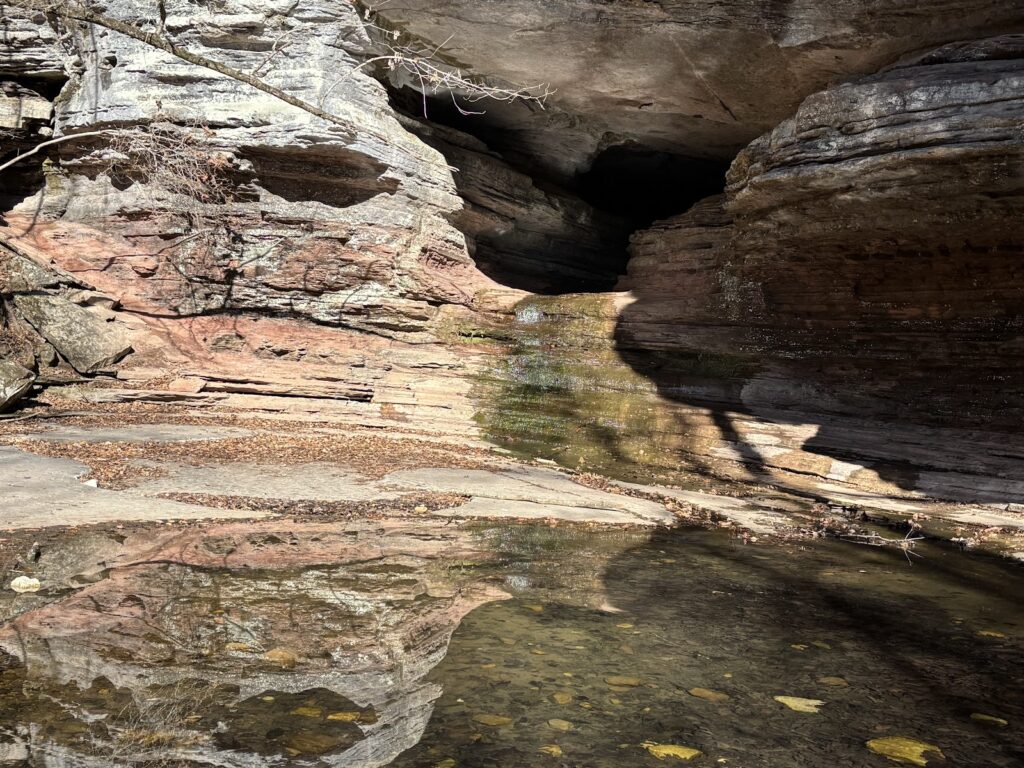
Along parts of the trail, the creek seemed to vanish.
What had been a steady stream of water suddenly became a mostly dry creek bed. The rocks were still damp, and the channel was clearly there, but the water itself had disappeared.
At first glance it looked as though the creek had simply run out.
But interpretive signs along the trail explained something fascinating about this landscape. Lost Valley sits in what geologists call karst terrain, where water moves through limestone, caves, and underground channels. In places like this, streams can slip beneath the surface and continue flowing underground before emerging again further downstream.
If you keep following the trail long enough, that is exactly what happens.
Further downstream, the water returns. Sometimes it seeps quietly back into the creek. Other times it emerges with enough force to feed pools, springs, and even waterfalls. Near the end of the trail, groundwater flowing through caves actually resurfaces and feeds Clark Creek again near Eden Falls.
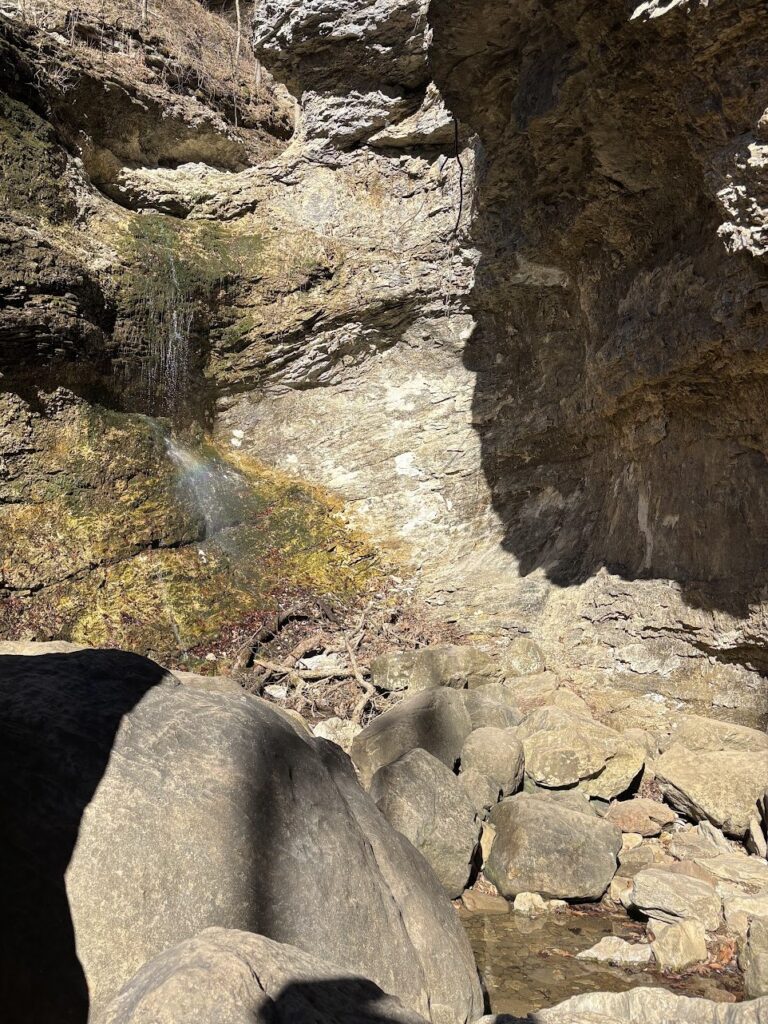
The water never really disappeared. It simply moved underground.
Standing there, it struck me how similar this is to culture inside organizations.
Most organizations have a stated culture. It appears in mission statements, strategic plans, and leadership messages. These visible expressions of culture are important. They help define values and direction.
But the visible culture is not the only culture that exists.
Beneath the surface runs a second current. This one flows through daily behaviors, informal decisions, and the unspoken norms people follow when no one is watching. It is reflected in how people treat one another, how leaders respond to challenges, and how teams behave when pressure rises.
This is the culture beneath the creek.
Sometimes the visible culture and the underground culture flow in the same direction. When that happens, the organization gains momentum. Trust grows. Teams move forward with confidence because what leaders say aligns with what people experience.
But when those two currents diverge, something different happens.
The visible culture begins to lose strength.
Energy disappears from the system. Initiatives slow down. Progress that once seemed possible begins to stall. From the surface it can look as though the organization has simply lost momentum.
In reality, the water has not disappeared. It has simply moved somewhere else.
When the lived behaviors of an organization contradict its stated values, those underground currents quietly redirect energy away from the work leaders hope to accomplish. Over time, the visible culture weakens because the deeper culture is flowing in another direction.
The opposite can also be true.
When the lived behaviors of a team reinforce the values leaders communicate, something powerful begins to happen. The unseen culture feeds the visible one. Trust strengthens. Collaboration becomes easier. Momentum builds naturally because the system is working together rather than against itself.
Just like water moving beneath a creekbed, culture always finds a path.
The question for leaders is not whether culture exists beneath the surface. It always does.
The question is whether those underground currents are draining the system or feeding it.
Sometimes the most important leadership work is not creating a new message about culture.
It is paying attention to the water beneath the creek.