
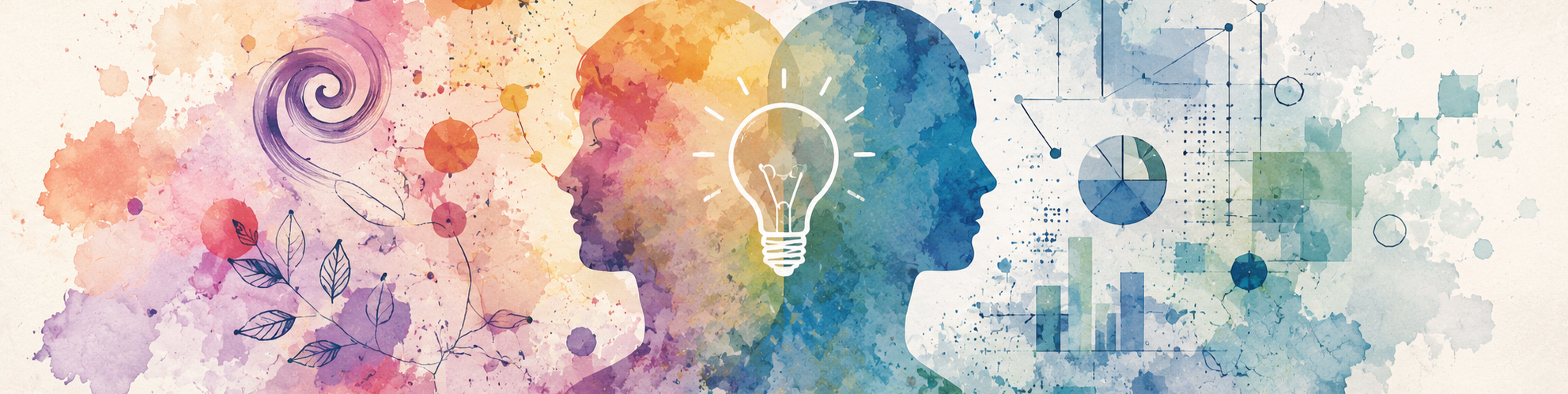
In conversations about the use of AI in schools, the topic of the impact of AI on student creativity almost always arises.
Many people are afraid that AI will limit a student’s ability to be creative. I have struggled with this, as I think both sides of this argument are correct. If left unguided, a dependency on AI could result in a person defaulting to AI instead of thinking through a problem or task themselves. It could result in someone losing their uniqueness to the algorithm. I’ll address this one in a later blog.
But, AI can also help inspire or trigger a line of thinking that would have otherwise been missed. If used responsibly, I would argue that AI can help those who aren’t naturally creative (like me) expand their thinking.
I often search for a word that just doesn’t come to my working memory. I get stuck in a rut and need inspiration to move forward. It’s not that I don’t have the knowledge or even ability to create, I just get blocked. AI helps me push through that hurdle.
A student on one of my AI panels once shared her perspective. She explained that she had to write an essay about herself and asked her AI to help her select a topic. Because she had used AI enough, many of the suggestions were on point. What surprised her was that one of the suggestions came from a paper she had written previously—an experience she would not have even considered. She took the suggestion and ran with it, creating an essay that was rich in context and creativity that she would not have otherwise written.
For those who are not naturally creative – the ability of AI to provide a starting point can be invaluable.
On the other side, for those who are creative, I think this is where the real fear is rooted. Those who can see a problem and explore unique solutions—we don’t want to lose that.
But you know what? I know some of those people, and they don’t default to AI for their solutions. Many of them get frustrated when others try to help them find a solution. Their nature is not to rely on outside thinking—they are the creative ones. Their brains work differently. They may use AI for research or even to explore similar solutions, but their sense of accomplishment comes from creating something unique. Artists, engineers, problem-solvers—they approach the use of AI differently. They instinctively know that AI can only regurgitate existing knowledge, not create something truly unique.
The solution? I don’t have a perfect one, but I think it starts with ensuring that those who use AI understand what it is and what it isn’t. It also requires us to acknowledge that we are uniquely human, and the solution is not the same for everyone.