Did I Say That?
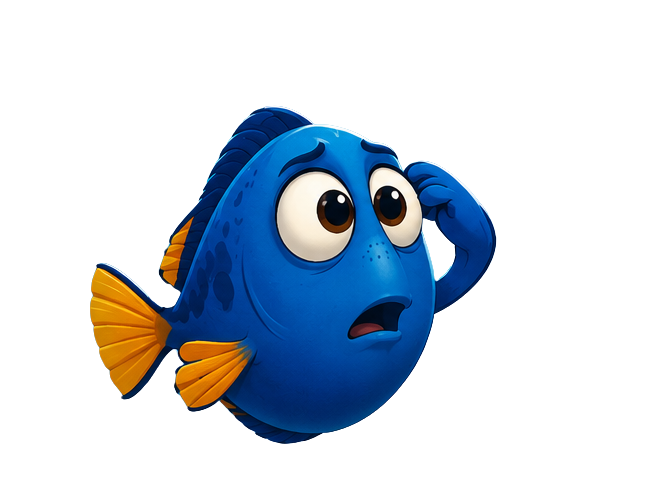
There’s a character in a popular animated movie who has a bit of a memory problem.
Everything feels familiar… but also completely new.
“I remember it like it was yesterday.”
Pause.
“Actually… I don’t really remember yesterday.”
It’s funny, until it isn’t.
Because lately, I’ve started to wonder . . . Are we heading in that direction with AI?
Not because AI is doing something wrong, but because of how we’re using it.
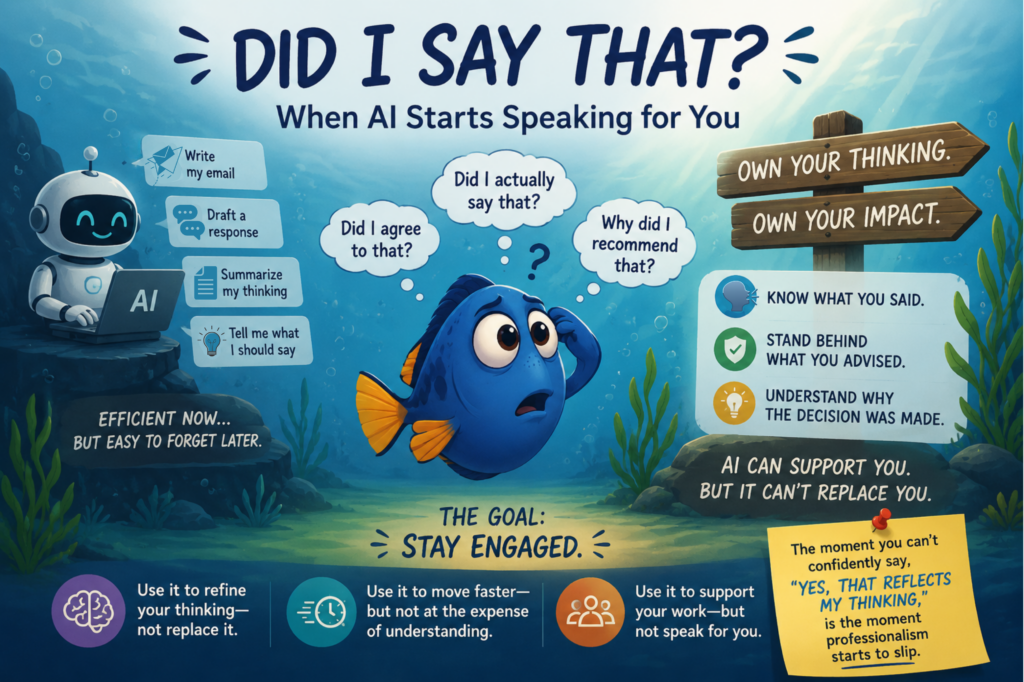
We ask AI to write emails.
We ask it to draft responses.
We let it summarize our thinking, shape our opinions, and sometimes even decide what we should say.
And in the moment, it feels efficient. Helpful, even.
But then later . . .
Did I actually say that?
Did I agree to that?
Why did I recommend that approach?
I don’t remember that email.
The more we outsource our thinking, the harder it becomes to remember the decisions, the interactions, and the words.
Not because we’re incapable, but because we weren’t fully present in the process.
And that matters.
Because professionalism isn’t just about what gets produced, it’s about ownership.
It’s about knowing what you said. Standing behind what you advised. Understanding why a decision was made.
AI can support that. But it can’t replace it.
If we give up too much control, we risk something subtle but important: We stop being the source and we become the reviewer.
And over time, that shift changes how we show up and our impact.
The goal isn’t to avoid AI. It’s to stay engaged.
Use it to refine your thinking, not replace it.
Use it to move faster, but not at the expense of understanding.
Use it to support your work, but not speak for you.
Because the moment you can’t confidently say, “Yes, that reflects my thinking,” is the moment your professionalism starts to slip.
And unlike a movie character…
We don’t get to laugh that one off.