
Lessons from the Trail
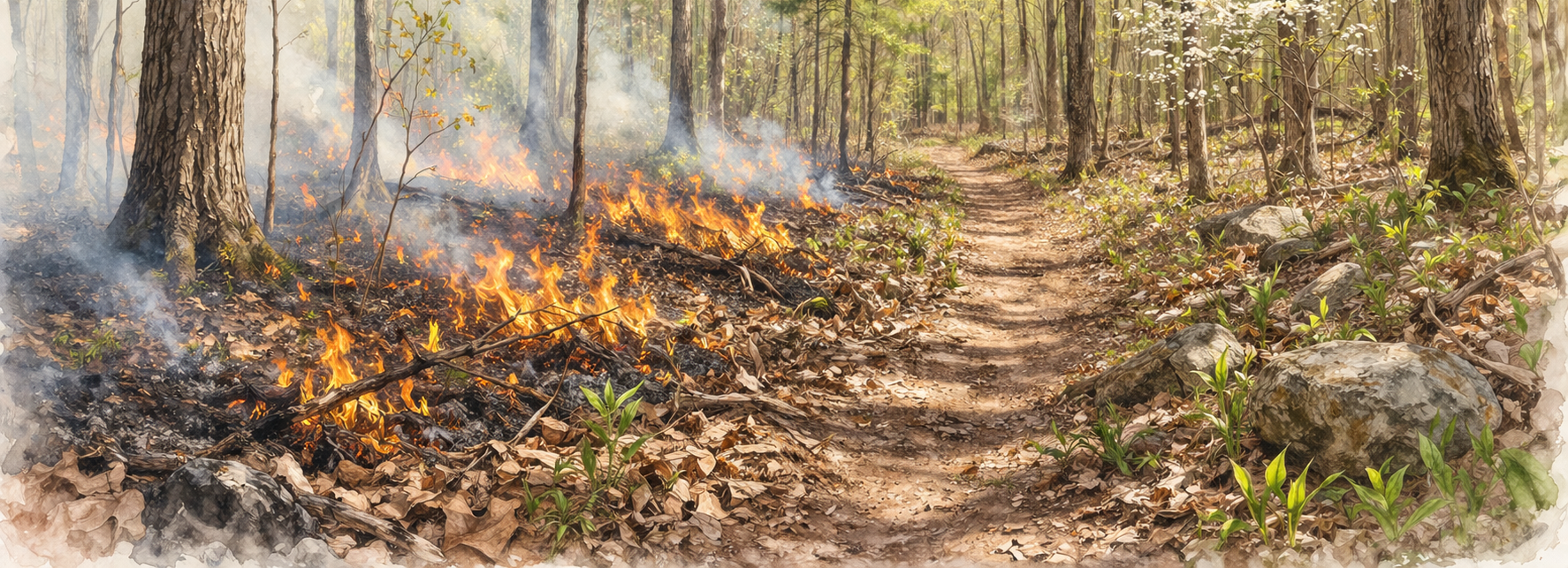
In many ecosystems, fire is part of the natural rhythm. Under the right conditions, intentional burns play a critical role in keeping the system healthy.
They clear out what has accumulated.
Dead branches. Thick underbrush. Layers of growth that, over time, begin to crowd the forest floor. Left alone, that buildup creates risk. It becomes fuel.
The danger is not always immediate.
From a distance, the forest may look full. Even thriving. But what appears healthy can, over time, become vulnerable to something much larger and far less controlled.
Controlled burns change that trajectory.
They are not reactive. They are planned. Carefully timed. Managed with intention and awareness of the surrounding conditions.
The goal is not to destroy. It is to protect what matters by making space for what comes next.
Schools are no different.
Over time, systems accumulate. Processes expand. Tools and programs are added to meet immediate needs, often with good reason.
Each one solves a problem.
Each one serves a purpose.
At least for a time.
But rarely do we step back and remove what is no longer needed. What once added value becomes part of the background.
Another layer.
Another expectation.
Another point of friction.
Individually, these additions may seem small.
Together, they begin to crowd the system.
What started as progress becomes complexity, not because what was added was wrong, but because nothing was intentionally cleared away.
And just like in nature, accumulation creates risk.
Not always in obvious ways. It may show up as fatigue. Confusion. Slowed decision-making. A sense that things are harder than they should be, even when everyone is working with the best of intentions.
Left unaddressed, that buildup can make organizations more vulnerable to larger disruptions.
The kind that requires sudden, reactive change. The kind that feels less like leadership and more like response.
Controlled burns offer a different approach.
Moments of intentional pruning. Thoughtful removal. A willingness to step back and ask what is still serving the mission and what is simply remaining because it has always been there.
This kind of work requires care.
Too much change at once can feel just as disruptive as the problems it is meant to solve. Too little allows the buildup to continue.
There is no perfect formula.
Only awareness. Timing. And a clear understanding of what you are trying to protect.
Because the purpose is not to create disruption.
It is to reduce it.
To create space.
To allow new growth to take hold in a way that is sustainable.