Lessons from the Trail
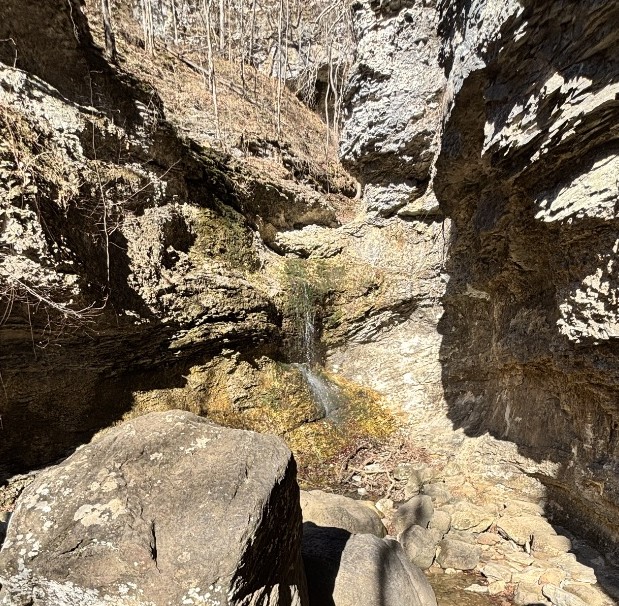
During a hike along the Lost Valley Trail near Eden Falls in Arkansas, one of the most fascinating things to observe is Clark Creek itself.
At first glance, the creek appears to follow a simple, predictable route through the valley. Water flows between rock walls, across smooth stone, and toward the falls further downstream. But the landscape tells a deeper story.
Clark Creek has not always flowed exactly where it does today.
Over time, the interaction between underground and surface water has reshaped its path through the valley.
The change was not sudden. But slowly, the creek began to favor a new route. The water followed the stronger path.
Just like organizational culture, waterways are not fixed features of the landscape. They evolve. They adjust. They respond to pressure and opportunity over time.
Many leaders speak about culture as though it were something embedded in the organization’s DNA. When certain habits, routines, or norms have existed for years, it can feel that way. Culture begins to appear immovable.
But culture flows through the patterns of behavior people repeat every day. It shows up in how decisions are made, how teams respond to challenges, and what behaviors leaders choose to reinforce.
Because culture is built through repeated behavior, it can also be redirected through repeated behavior.
That is where many leadership efforts struggle.
When organizations recognize the need for cultural change, the instinct is often to rebuild everything at once. New initiatives are introduced. New language appears in strategic plans. Expectations are reset overnight.
But the trail offers a different lesson.
Creeks do not bulldoze new channels through the valley in a single moment. They redirect slowly, through persistent movement and steady pressure. Water returns to the same point again and again until the landscape begins to shift.
Leadership works in much the same way.
Small changes in behavior, repeated consistently, begin to reshape expectations. New patterns start to form. Over time, what once seemed like the only path forward is no longer the strongest current in the system.
Eventually, the organization begins to move in a new direction.
Even stone yields when pressure is applied consistently over time.
The same is true for organizations.
Culture can change direction when leaders consistently guide energy toward a better course.